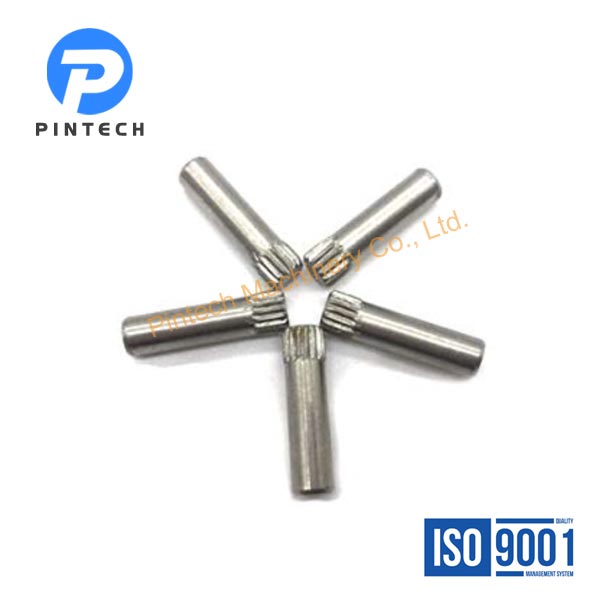
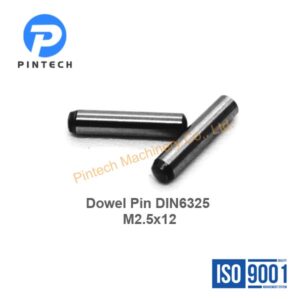
Dowel pins are widely used for alignment, but can also work great as a bearing surface for rotation. Another benefit is they can be removed and replaced by the end-user without distortion.
Wenqi Machinery leverag advanced equipment, craftsmanship, comprehensive support, and professional service, specializes in the production of needle rollers, cylindrical rollers, and dowel pins.
Groove and dowel pins are but two of many that manufacturers use to assemble parts as diverse as vehicle engines, compressor pistons and makeup powder compacts. Equally important to manufacturers are metal dowels, which ensure proper alignment of mating components with minimum hole preparation.


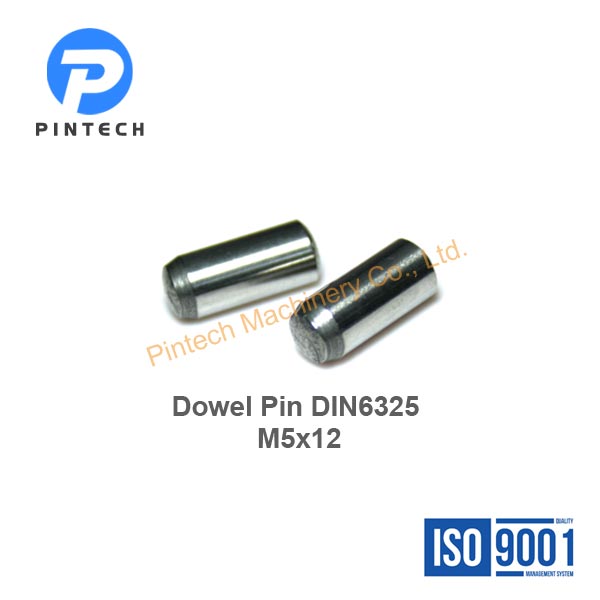

Both the pins and dowels are cost-effective, install easily and have a decades-long record of success. No wonder they are increasingly popular among manufacturers in a wide range of industries, most notably automotive, medical devices and recreation.
Many types of pins are used for assembly, and are categorized as either solid or hollow, with a symmetric or an asymmetric shape. Solid symmetric pins include dowel, grooved, knurled, barbed and ferrol. Flat- and round-headed versions of these pins, also known as studs, are considered asymmetric.
Hollow symmetric pins are slotted and coiled spring. All dowels are hollow symmetric with either a split or seamless body.


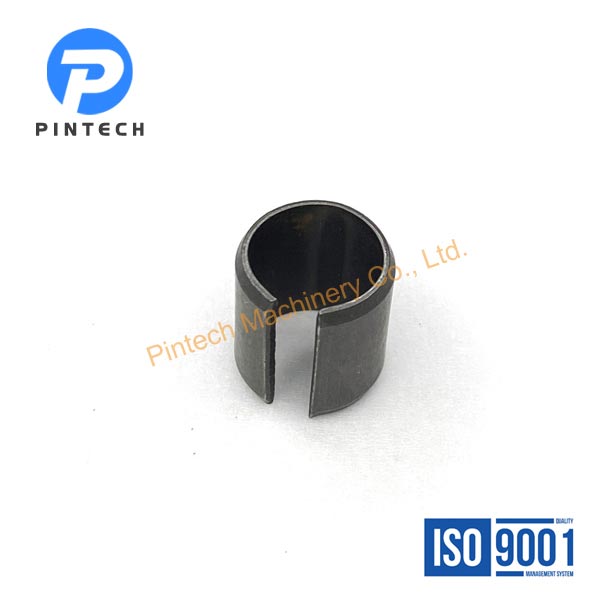
Pins and dowels measure from 0.03125 to 1.5 inches in diameter and up to 6 inches in length. They are most commonly made of low-carbon or stainless steel, various alloys, aluminum, brass or titanium. Finishes include passivated, nonpassivated and black oxide.
The dowel pin is a smooth cylinder of metal, although it may be chamfered at each end to aid insertion. This pin is typically hardened and manufactured to precise fractional diameters and lengths, and used as a hinge, shaft or pivot to locate or hold parts together.
The dowel pin withstands the most shear force of any fastening pin. It is preferred for high-production assembly because it requires no extra fastening hardware for insertion or secondary operations.
Knurled pins are available with either straight, helical or diamond-configured knurls. Unlike a straight dowel pin, where retention is provided by the uniform interference between the pin and hole, knurled pins are designed to cut into the host components. However, neither knurled nor grooved pins require the tight tolerances needed by precision solid dowel pins.