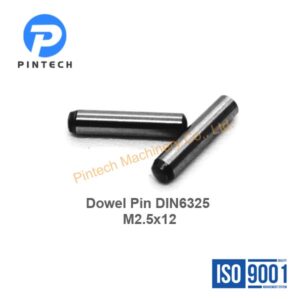
Needle rollers made from AISI 52100 refer to cylindrical rolling elements used in bearings, linear guides, and mechanical systems. They are constructed from AISI 52100 steel, a high-carbon, high-chromium alloy widely recognized for its excellent properties in rolling applications.
Key Features of Needle Rollers
Design
Long and slender cylindrical rollers.
Length is typically greater than the diameter.
Enables high load-carrying capacity in compact spaces.
Purpose
Used in needle roller bearings or linear systems to minimize friction and support loads efficiently.
Properties of AISI 52100 Steel
Chemical Composition
High-carbon content (~1%): Provides hardness and strength.
Chromium (~1.5%): Offers wear resistance and enhances hardness.
Mechanical Properties
High Hardness:
Typically 60-67 HRC when heat-treated.
Exceptional Wear Resistance: Ideal for applications with high mechanical stresses and repeated contact.
Fatigue Strength: Excellent for applications requiring repeated rolling or sliding.
Corrosion Resistance
Limited in non-coated form; prone to rust if exposed to moisture.
Surface treatments or coatings (e.g., black oxide, chrome plating) can improve corrosion resistance.
Applications
Needle Roller Bearings: Common in automotive systems (e.g., gearboxes, transmissions). Used in machinery requiring compact, high-load-bearing elements.
Precision Machinery: Linear motion components in robotics, industrial automation, and aerospace.
Automotive Components: Supports high rotational speeds and load capacities in tight spaces.
AISI 52100 needle rollers combine compact design with excellent load-carrying capacity, making them indispensable in high-precision and demanding mechanical applications.