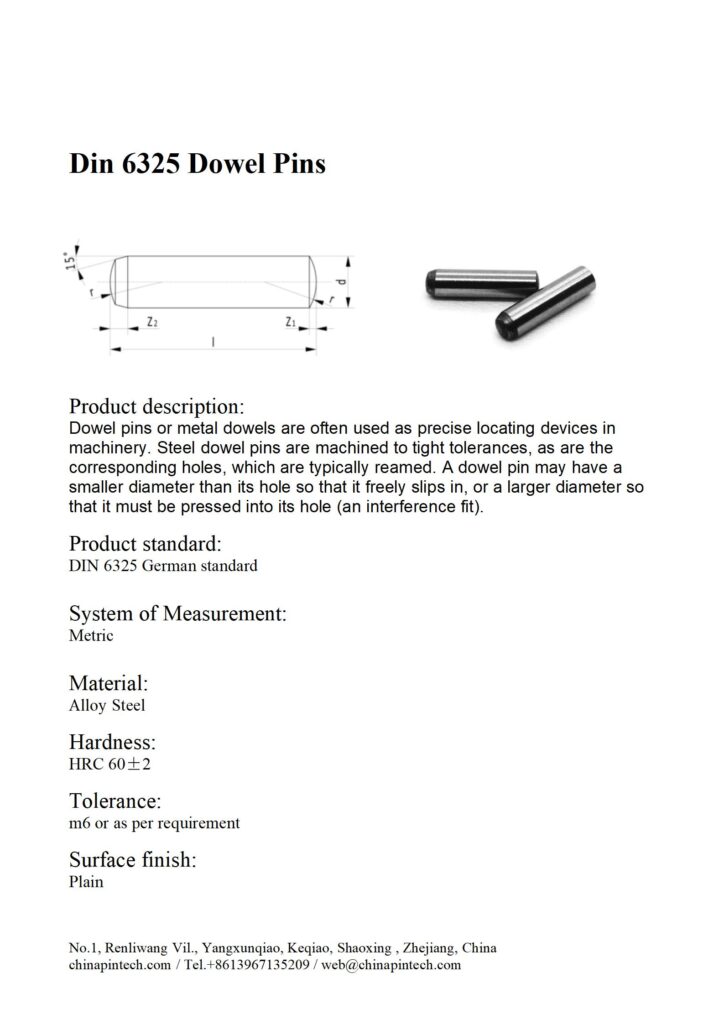
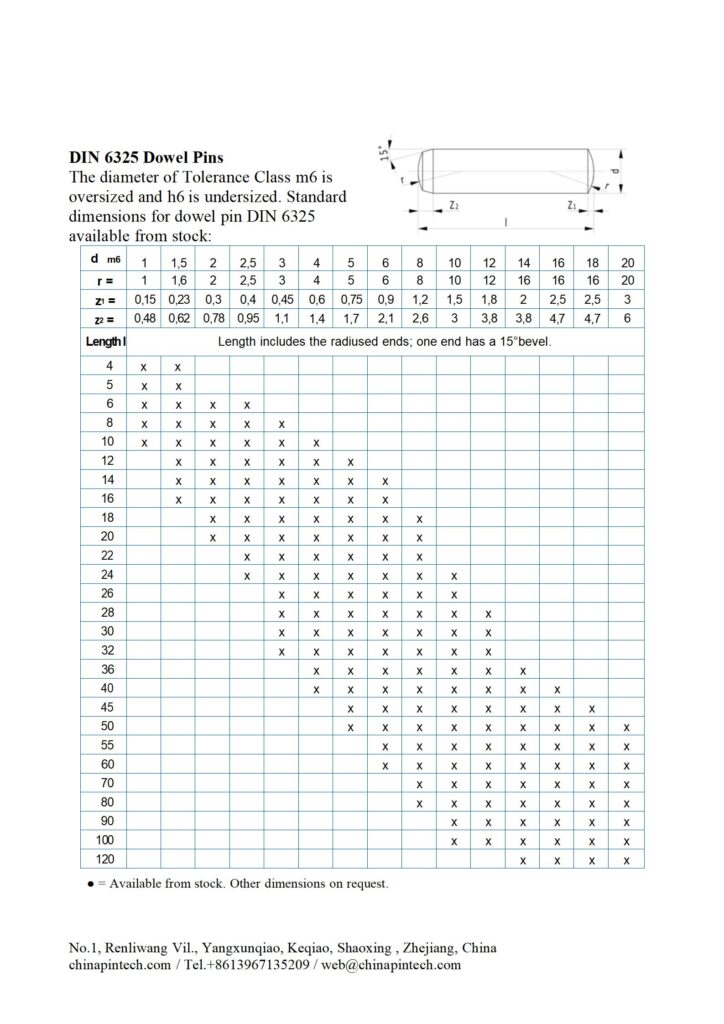
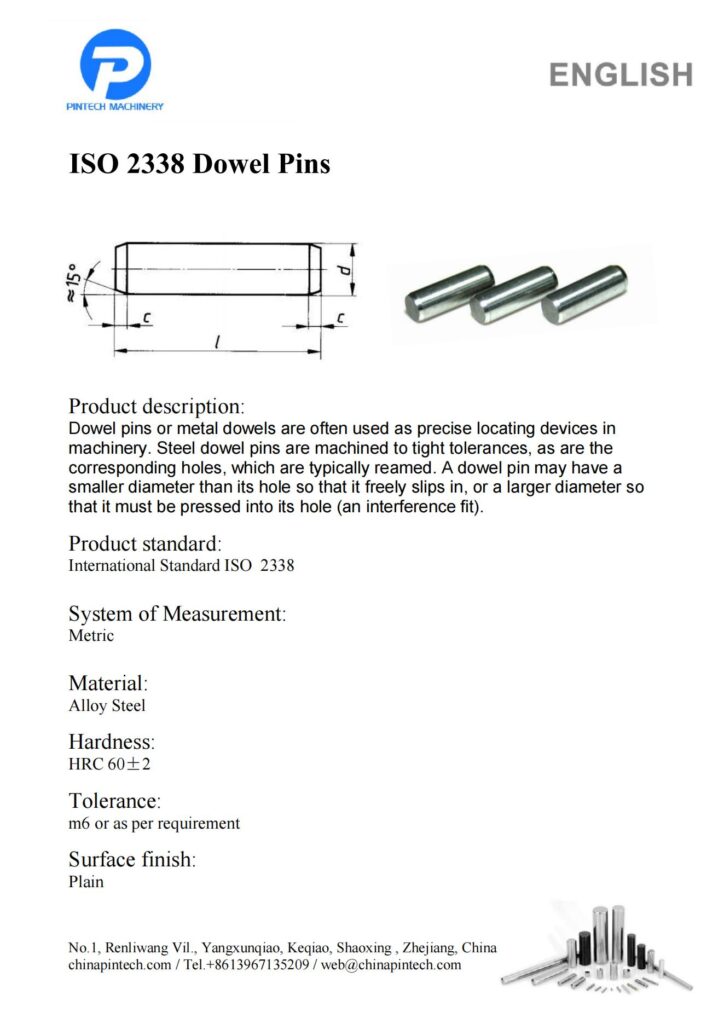
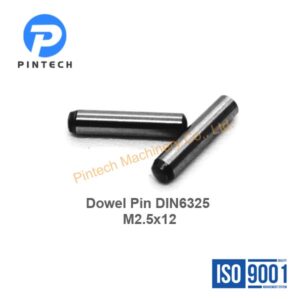
Understanding the difference between DIN 6325 and ISO 2338 dowel pins is essential for ensuring the functionality, reliability, and efficiency of mechanical assemblies. Selecting the right pin standard directly impacts performance, costs, and maintenance requirements in various engineering and industrial applications.
Why Knowing the Difference Matters
Precision and Fit Accuracy
- DIN 6325:
- Manufactured to a h6 tolerance (very tight).
- Ensures accurate alignment and snug fits in reamed holes.
- Critical for precision machinery, tooling, and robotics where minimal play is essential.
- ISO 2338:
- Manufactured to h8 or m6 tolerances (looser fits).
- Suitable for applications where perfect alignment is not mandatory.
- Risk of fit gaps and slight play if used in precision-critical assemblies.
Why it Matters: If precision alignment is needed (e.g., robotic joints or automotive assemblies), choosing the wrong pin could lead to misalignments, vibration, or operational inefficiencies.
Load-Bearing Capacity and Strength
- DIN 6325:
- Made from hardened steel (typically HRC 58-62).
- Handles high shear loads and resists wear under repetitive or heavy stress.
- ISO 2338:
- Typically non-hardened steel or soft materials.
- Lower strength makes it unsuitable for high-stress applications.
Why it Matters: In high-load environments (e.g., gearboxes, engines), a weaker ISO 2338 pin could fail prematurely, causing system failures, downtime, and costly repairs.
Application-Specific Requirements
- DIN 6325:
- Designed for applications demanding precision, durability, and reliability, such as:
- Robotics and Automation
- Automotive Engines and Gearboxes
- Tool and Die Making
- Ideal for high-performance equipment where failures are unacceptable.
- Designed for applications demanding precision, durability, and reliability, such as:
- ISO 2338:
- Suitable for low-stress or general-purpose applications, such as:
- Assembly fixtures.
- Structural alignment in less demanding environments.
- Suitable for low-stress or general-purpose applications, such as:
Why it Matters: Misapplying ISO 2338 in a critical system could cause frequent misalignments or failures, jeopardizing operations.
Cost vs. Performance Trade-Off
- ISO 2338: More cost-effective due to its simpler manufacturing process, less stringent tolerances, and non-hardened materials.
- DIN 6325: Slightly more expensive because of tighter tolerances, precision grinding, and material hardening.
Why it Matters: If high precision or strength isn’t required, over-specifying DIN 6325 could result in unnecessary costs. Conversely, choosing ISO 2338 when precision matters could compromise the product’s performance.
System Longevity and Maintenance
- DIN 6325:
- Longer service life due to wear resistance and load-bearing capabilities.
- Reduces the risk of frequent replacements or repairs.
- ISO 2338:
- May require more frequent maintenance or replacements under stress.
Why it Matters: In systems with constant loads or movement, choosing the wrong pin increases wear and tear, causing unscheduled downtime and added maintenance costs.
Knowing the difference between DIN 6325 and ISO 2338 ensures you choose the right pin for your application. Whether you prioritize precision, strength, or cost-efficiency, selecting the wrong standard could lead to misalignments, failures, increased costs, and reduced system life.