It is common belief that a simple test for stainless steel is to check with a magnet. If it attracts, the product is not stainless steel. However, this assumption is incorrect.
The grades of stainless steel commonly used for fasteners are the Austenitic grades such as AISI-304 and AISI-316. When supplied in sheet or coil form they are essentially non-magnetic. When these forms are worked – bent, deep drawn, formed into a tube – they become magnetic.
The strength of the magnetism depends on how much the metal has been deformed. Even when these grades are cut (cold, by shearing) the deformation in the edge of the metal causes magnetism.
Stainless steel bolts are made by cold forging the head, and cold rolling or machining the thread. They are often quite strongly magnetic.
How Does An Austenitic Stainless Steel Become Magnetic?
The micro structure of the metal is what gives the steel its magnetic properties. If the stainless steel chosen was austenitic, e.g. type 304, and a portion of the micro structure were changed to any one of the other four classes then the material would have some magnetic permeability, i.e. magnetism, built into the steel.
The microstructure of austenitic stainless steel also changes due to a process known as martensitic stress induced transformation (MSIT). This is a microstructural shift from austenite to martensite that can occur as a result of cold working (the manufacturing method for many fasteners) and gradual cooling from austenitizing temperatures. Because martensite is magnetic, the previously nonmagnetic austenitic stainless steel will suddenly exhibit magnetism.
Cold Working
Though it may not appear so, all fasteners can undergo a significant amount of cold working before seeing duty in the field. Cold working fasteners happens throughout the wire drawing, shaping, and thread rolling operations. Each of these processes will normally produce enough martensite to produce a detectable level of magnetism.
Does Magnetism Affect The Corrosion Resistance Of Stainless Steel?
Magnetism and corrosion resistance aren’t related. Corrosion resistance is determined by the amount of chromium and (in some cases) molybdenum present in stainless steel. The higher the chromium and molybdenum content, the better corrosion resistance.
Therefore, the main purpose for which Stainless Steel Fasteners are used – Corrosion Resistance is unaffected by any magnetism and is safe to use.
It is only for specialized applications such are use in MRI machines where there is a strong magnetic field that the user/designer needs to consider de-magnetising stainless steel fasteners.
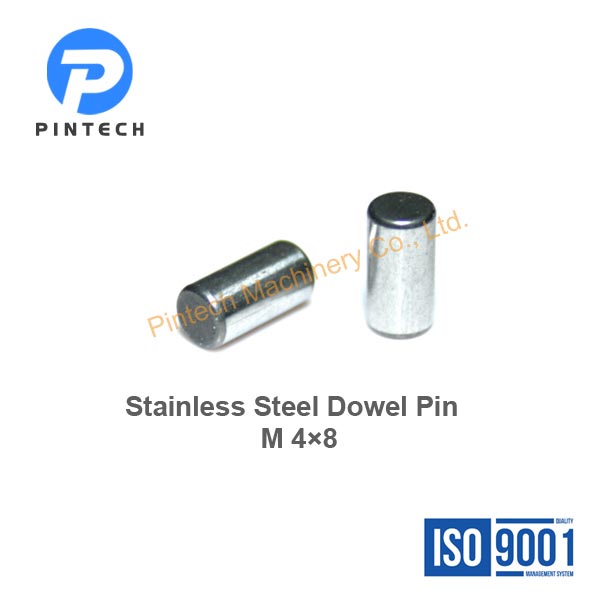
Different Types Of Stainless Steel Dowel Pins
Pintech offers a range of stainless steel dowel pins to accommodate different application requirements.