Fasteners are some of the most important parts of an assembly, as they hold the entire assembly together and facilitate the interaction between the individual components. The ideal fasteners are easy to assemble, produce a high-quality product for the assembly’s planned lifespan, and result in the assembly’s lowest total cost when the manufacturing process is taken into account.
The choice of pin for an application is the main topic of this essay. Since press-fit pins are the most often used kind of pins in contemporary manufacturing, they are specifically covered in this article.
Types of Press Fit Pins
Press-fit pins can be broadly classified into two types: solid pins and spring pins.
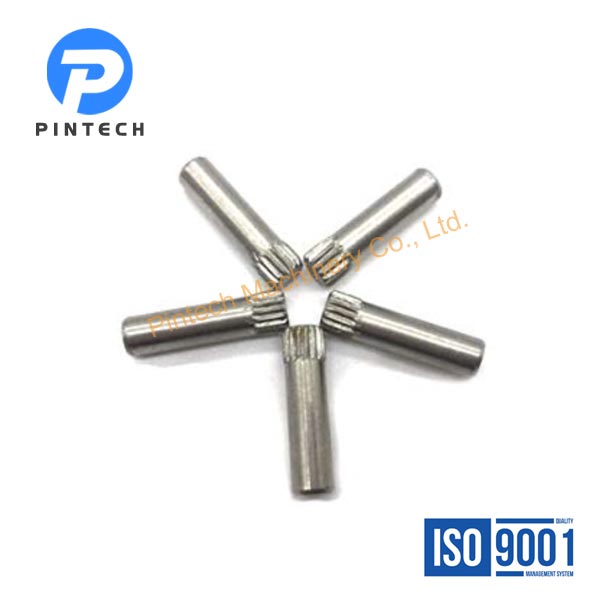
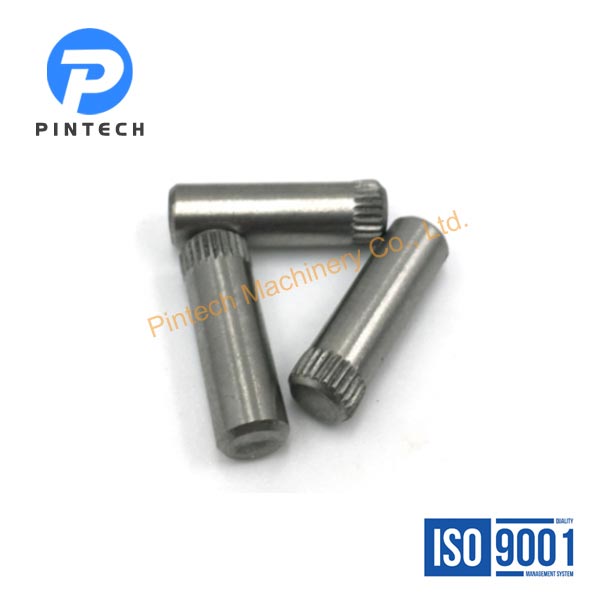
Solid pins can be made with retaining elements like knurls, grooves, and barbs, or they can have a smooth, continuous surface like dowels. By shifting the host material, all Solid Pins are held in place.
On the other hand, following installation, spring pins maintain their position by applying a radial force (tension) against the hole wall. Spring pins come in two varieties: coiled pins and slotted pins. For non-critical assemblies, slotted spring pins are generally suggested as a general-purpose, affordable pin option. Slotted pins are frequently utilized in applications where mild to hardened steel components need to be manually fitted. With three different levels of coiled spring pin availability—light, standard, and heavy duty—the designer may select the ideal blend of strength, flexibility, and diameter for a range of host materials and performance needs.
General Considerations for Pin Selection
Spring pins are typically preferred over solid pins because of their flexibility, lower insertion forces, and their ability to accommodate wider hole tolerances as compared to solid pins.
Solid pins are recommended in the following typical exceptions:
- When a head is required for a positive stop or to retain a thin member to a thicker member of the assembly.
- When a smooth, uninterrupted surface is required, such as when used in conjunction with a pallet or other angular component.
- When a hollow pin is not suitable, such as when the designer is looking to plug a hole (i.e., restrict the passage of liquids).
- When there is a need to manually align several clearance holes.
- When increased bending or shear strength is required.
- When precise hole locations need to be maintained.
Coiled spring pins are undoubtedly superior when it comes to assemblies subject to dynamic loading. Because of their special blend of strength and flexibility, coiled spring pins can reduce stresses and vibration, preventing hole damage and extending the life of assemblies.
By choosing the right pin for the job, designers can maximize an assembly’s performance and overall cost of manufacturing. Fastener alternatives must be taken into account as early in the design process as possible in order to accomplish this. Setting performance requirements and doing a thorough application evaluation are the most crucial steps in choosing the right pin.